

About PriaAlam and Our Editorial Standards
Why a supplement page here says less than the packaging does.
Who runs this site
PriaAlam is a small editorial team based in Jakarta, writing in English for men in Indonesia who want straightforward information about supplements. We're not a store, we don't sell products, and we don't take payment for coverage. The site exists to explain natural supplements for men — what goes into them, what form they come in, and how brands at Indonesian counters differ from one another.
The team is small. Writers handle ingredient explainers and format guides; one editor reviews everything before it publishes. That means a page about vitamins and minerals for men gets read at least twice — once by whoever drafted it, once by someone checking that a dose figure matches the label and that a claim has not quietly become a promise. We publish in English for Indonesian readers who read English comfortably, including people who buy locally and people who order from regional marketplaces.
If you want to know why a particular product gets described a certain way on this site, the answer is usually here or on our comparison methodology page. Where it isn't, write to us and we will say plainly what we do and do not know.
How we choose topics
Three places a topic comes from
We don't write from a content calendar that lists twenty products. Topics come from questions readers send us, recurring gaps we notice in how supplements are described at retail, and updates to how products are labelled. When we see the same question three times, it becomes an article.
That rhythm keeps the site close to what men actually ask. Someone standing in a Jakarta pharmacy with two boxes in hand wants to know which format is easier to take daily and what the label is telling them — not a general lecture about wellness.
Reader questions
Emails about dose figures, format choices and label wording set the agenda more often than anything else.
Retail gaps
Where a shelf sign claims something the box doesn't support, we explain the difference in plain terms.
Label changes
When a brand changes an ingredient form or listed strength, older copy elsewhere goes stale. We re-check.
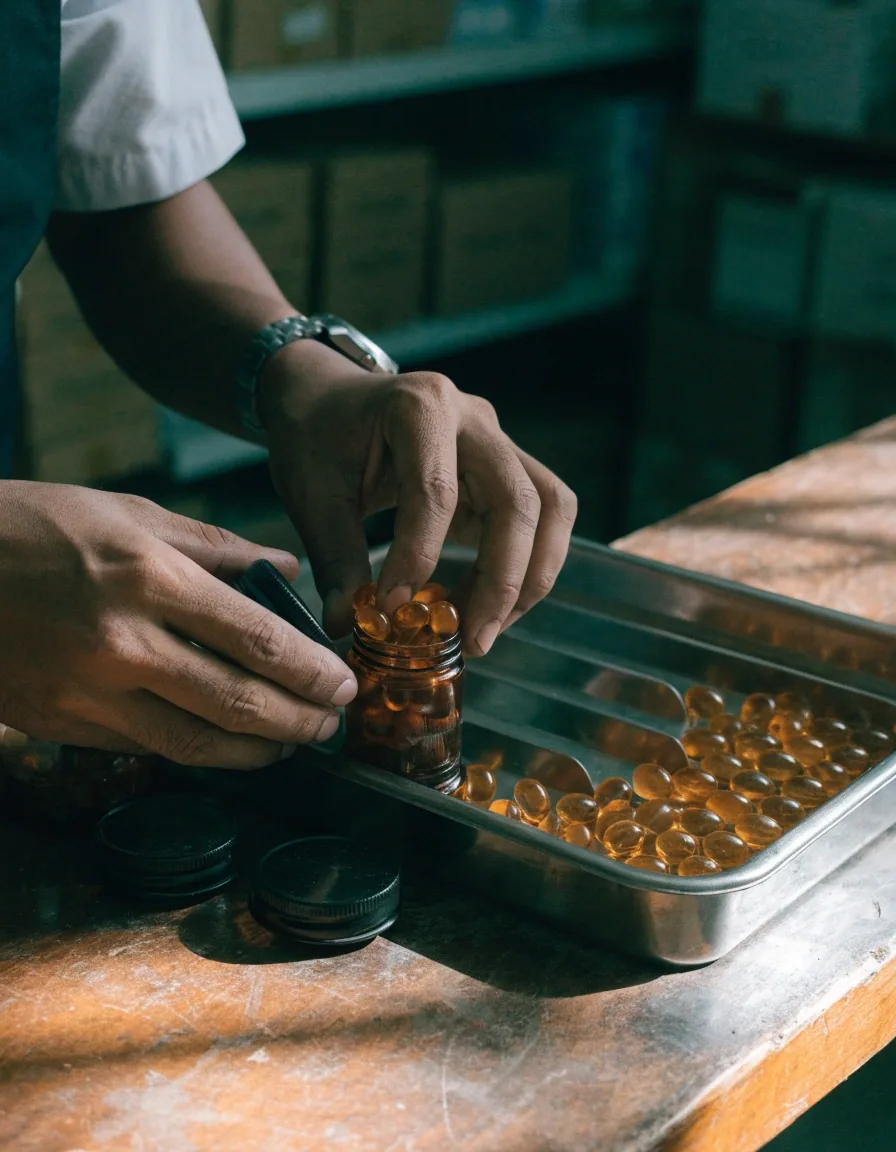
The counter this site is written from: formats first, brand names second.
Our research approach
We read product labels and packaging information as the primary source. We look at how a product is described in Indonesian retail channels, including pharmacy chains and marketplaces. When a brand publishes ingredient forms or dosage details, we note them down and cite the figure as listed. The rows below show how that work is organised.
Packaging and label text
Primary source
Ingredient forms, listed strengths, serving size
Always checked
Retail listing wording
Cross-check
Pharmacy chains, marketplace listings, format sold
Compared
Brand-published formula notes
Secondary source
Ingredient forms the brand itself states
Attributed
Physical testing or lab measurement
Not done
We don't test products ourselves
Stated openly
So when we say a formula uses bioavailable ingredient forms, that's because the label or the brand states it, not because we measured it. Thorne Basic Nutrients 2/Day is a good example of a product discussed in those terms — the description follows what the brand publishes, and nothing more. Where a listed strength like Solaray Maca Root 525mg per capsule appears on this site, it appears because it is printed on the pack, and we leave it at that rather than turning a number into a result.
What we don't do
A supplement page that only repeats the packaging has not done its job.
No sold rankings
We don't publish rankings sold to advertisers, and we don't write sponsored comparisons. If a brand is involved in a piece, that involvement is stated on the page itself.
No before-and-after framing
We don't use before-and-after framing, and we don't publish reader transformation stories. Expectations around daily supplements are best kept realistic.
No individual advice
Supplements interact with health conditions and with other things people take, and that assessment belongs with a doctor or pharmacist who knows your situation. When a question crosses that line, we explain the general principle and point you to a professional.
How we handle ingredient claims
Ingredient sections on this site describe what an ingredient is, how it's commonly sold, and what position it typically holds in men's wellness products. Ashwagandha, for example, is described as an adaptogen sold mainly in capsules in Indonesia — a common ingredient in natural capsules for strength and vitality — rather than as a solution to any particular problem.
Where a product has a listed strength, we state that figure because it's listed. We don't extrapolate it into an outcome. That separation is the core of how we write, and it's also the easiest thing for a reader to test: open any product page here and check whether it tells you something you couldn't already read on the packaging.
Adaptogens first
Ashwagandha and maca root are treated as ingredients to understand, not as promises.
Listed strengths only
Solaray Maca Root 525mg per capsule is recorded exactly as printed, with no outcome attached.
Corrections and feedback
If a brand changes its formula, old copy is the most common problem in supplement writing.
If you spot an error in an ingredient list, a product format, or a stated dose, write to [email protected] with the page address and what you believe is correct. We check against labels and retail listings, then update the page. Tell us if a brand changes a formula — that kind of drift is the single most common source of stale supplement writing, and it rarely announces itself.
We note meaningful corrections at the bottom of the relevant article so the change is visible rather than silent. Minor wording edits we simply make. Beyond corrections, we also take topic suggestions: if you keep hitting the same unclear description of vitamins and minerals for men on a shelf, that's worth an article, and it probably already has one drafted.
Language and audience
Everything here is in English, written for readers in Indonesia. That means we explain terms a reader in the US or UK might already know, and we reference the formats and channels you actually encounter: capsules sold in pharmacy chains, gummies in big-box retail, listings on local marketplaces.
We use Indonesian supplement vocabulary where it's standard — terms like suplemen pria, vitamin dan mineral and daya tahan tubuh — because that's the language on the packaging you're holding. It also means a page about energy and endurance supplements reads the way someone standing at a counter in Jakarta would ask the question, not the way a global brand would answer it.
The site covers men's vitamin supplements, healthy lifestyle products and popular products for men side by side, because a reader usually arrives with a mix of questions rather than one. Some pages explain a single ingredient; others compare formats or describe how a category is sold locally.
Advertising and independence
PriaAlam may display advertising. Advertising never determines which products we describe or how we describe them. If we ever publish material that a brand has any involvement in, that involvement will be stated on the page itself rather than buried in a footer.
You can verify our independence test yourself: pick any product page here and check whether it tells you something you couldn't already read on the packaging. If it doesn't, tell us — that is the kind of note we act on first.
Questions we get about the site itself
If your question is about an ingredient or a format rather than about us, the answer is likely on the page for that ingredient or on our comparison methodology page.
Do you sell the products you describe?
No. PriaAlam is an editorial site, not a shop. We describe formats and ingredients and point to where a category is sold, but nothing here is a purchase and we take no payment for coverage.
How is a listed strength different from a claim?
A listed strength is a figure printed on the packaging, such as 525mg per capsule. A claim is a statement about what that figure does. We report the first and leave the second to the label and to your own decision.
Can I ask you what I personally should take?
We can explain how an ingredient or a format is generally described and used. We can't assess your situation, and that assessment belongs with a doctor or pharmacist who knows your circumstances.
Why is the site in English if I'm in Indonesia?
Many readers here compare labels written in English and buy across local and regional channels. Writing in one language keeps the explanations consistent, and we still use the Indonesian terms that appear on packaging.
How quickly do corrections get published?
It depends on how fast we can confirm the point against a label or a retail listing. Once confirmed, the page is updated and a meaningful correction is noted at the bottom of the article.
Read the standard, then read a product page
This page states what we do and where our limits are. The comparison criteria page shows how those limits turn into the descriptions you actually read on a supplement write-up. If something still doesn't add up, the address above is the way to reach the editor.